30 March 2011

ROADSHOW AND TELL - the journey begins

ROADSHOW AND TELL
WEEK 1

Team Planning for the Roadshow and Tell
Lyndle has been project managing the delivery of the 'Roadshow and Tell' and  accompanied me on the first week of our travels. She had planned so much down to the infinite degree, regularly assisted by the rest of the team. Sessions to compile the folders, team input into what would go onto the CDs, then team members compiling the CDs while another one designs the CD covers and another one gets the CD stickers. The simplest task required teamwork and co-ordination when your talking state wide and in large numbers.

It does not matter how well we plan things always tend to come undone at the last minute and add to the stress levels! Items we had ordered weeks in advance either did not arrive or were delivered to HQ but to the wrong person so could not be found! Friday afternoon before we left saw the team struggling to fit all our newly developed tools into the station wagon – Thanks to Matt and Luke for their expert packing skills and team work! Mmmm or were they just in a hurry to see us go . . . . .


The first week away for Roadshow and Tell came and went in a flurry of activity, meeting some great people and involved us (Tanyia and Lyndle) learning at every roadshow.

Day 1 - Mudgee

 
Blue Mountains pretzel mmmmm
On the road by 8am with a quick stop off in the Blue Mountains for a pretzel. What a great start to the week!

Arrived in 'sticky' Mudgee and set up for the first session. After spending over an hour unpacking the car and then putting up all 30+ items onto the walls, we were very glad that we had decided to leave each Roadshow location with their own copy of posters, magnets and icons. Leaving the goods behind did have the added advantage that at 9.30pm each night we did not have to take it all down again and repack the car again!


Great first session with the staff from Mudgee. Good to see such enthusiasm for the Roadshow and Tell concept about sharing ideas and information around the state. A special thanks to the Regional Community Safety Manager for Region West, Simon Curry for attending the staff session. Also thanks to Jayne and Gary for their presentations and enthusiasm in getting involved.
Evening session Mudgee

The evening session at Mudgee was our largest group session for week 1. We saw 3 great presentations from Natalie, Graham and Paul. It was a great, interactive, varied and enthusiastic session.


Presentation by Graham
 Issues discussed were around gaining the support of your brigade and also ways to engage the community and get them actively involved in making changes to protect their property.

What I liked about this group was the willingness to listen, exchange ideas and the desire to keep on engaging internally and externally - the will to want to make engagement happen!

Healthy McDonald's for dinner at 10pm and then back at the motel where Lyndle struggled with mosquitoes the size of small birds and Tanyia struggled with Wi-fi that wouldn’t cooperate.

Note: Sure fire way to frustrate Lyndle - put her in a station wagon and get her to park it in a town that only has reverse angled parking - very funny indeed!

All in all a good day and a great start to Roadshow and Tell 2011!

Day 2 – Forbes

The staff session started off a little slowly but soon enough everyone got into the swing of things. Staff expressed disappointment that not more staff had attended this roadshow.
Forbes invented Flame hand puppet!
Feedback on the new tools was encouraging. Much discussion also occurred  around ways to communicate between Head Office and teams such as this team - the best way to ensure everyone was up to date and across new tools and information. We were shown some ideas for roadside signs that we will look at developing.

The Forbes volunteer session was smaller than Mudgee but very energetic. There was some great discussion about how to engage those that don’t want to be engaged (internally and externally) as well as what is happening at a local level. Terry talked to the group about reinvigorating the cadet program in his area and Peter spoke about local 'walk around' property inspections and the value these property inspections had to both the community and local brigades.

This was a small but passionate group, some had travelled around 1.5 hours to attend the Roadshow! Your openness and interaction were very much appreciated.

Even the quick dinner before the evening session (that tasted like sawdust) and the accommodation (demountable buildings with paper thin walls under a bridge frequented by engine braking road trains and creep crawlies with multiple legs) couldn’t take the shine off the great evening we had with this group.

Day 3 – Griffith

Cool start to the day with a stop off in West Wyalong for breakfast – what a quirky town! Great Bacon and Egg rolls though!

 
Matt showing the Griffith trailer
Arrived at one of the stranger looking FCC’s we’ve seen – an old house. It has a lot of character and a really homely feeling which made it very welcoming once inside.The Griffith team is looking forward to moving to a new FCC over the coming year or so. 


A big thanks to Matt and Charles for spending the time with us and letting us do a video tour of their trailer! They have done some excellent work with the trailer and it has some interesting and unique features. Check out the video on our Face book if you haven’t already seen it!

Locally made prop to increase fire awarenes
The teamwork that we saw demonstrated by the staff in this FCC was inspiring and a tribute to them all. Despite not having one of the better FCCs the environment they created was of dedication, total professionalism, great teamwork and a passion for community engagement. We left in awe of their 'can do attitude' and team spirit.
At the volunteer session in the evening we saw 2 of the largest pizzas in existence, totally HUGE! We were also joined by Roger from the Griffith Council who was interested in seeing just what the RFS was up to in engagement land . This also really helped make the week for us - to see these critical local relationships at work. We had some great discussions about how to engage with different groups within the community that may have historically been challenging to engage. Special thanks must go to Sean and Kevin for making the 1.5 hour drive to attend the session! Attendees at this session have become very active on our Face book page which is very much appreciated - thanks guys!

Without a doubt the highlight for both of us was the great team atmosphere at the Griffith FCC and the passion from the local Indigenous members. Facilitating these 2 sessions was really enjoyable - good conversation with some new ideas and leading edge people.

Day 4 – Deniliquin

Both of us felt a little sluggish and tired this sunny but cool morning but some really strong coffee got us both going!

Had to make a quick stop off at Target Country for Lyndle to buy some ‘sensible’ (I think her description was ugly) black shoes. Lyndle had managed to go 3 days in very high heels but was swayed by the temptation of soft incredibly comfortable flat shoes!  


Some of the new communication icons recently developed
Good afternoon session in Deniliquin. Unfortunately Alison couldn’t join us as she had to go to Sydney for the RFSA and NSW RFS Consultative Committee. We crossed paths at the door and managed to say 'hello, travel safe and and bye.'

We saw some of the great work that is being done locally such as the 'You Can or You Can’t’ Brochure, the farm preparedness graphic that is being put in local papers and some of the roadside signs they had been using. Also thanks to Doug for doing a demonstration of his “Tools not Toys” presentation he does for school kids and showing us their trailer with some nifty ideas to make set up safer and easier.

Very enthusiastic and energetic volunteer session that night with some great feedback about the tools we had brought along. The local team decided they were going to use the wooden fire triangle, the magnet posters and the key message cards at the show that weekend! Great that the communication tools we have been working on will be so useful so quickly for the volunteers out there! This group were on the ball, understood the meaning of the survey results and were very conversant with their local issues and needs.

We finished the Roadshow early so decided to have a proper dinner for the first time that week. Not a lot opened in Deniliquin after 8.30pm. Found ourselves at ‘Ho’s Chinese Restaurant’ where the decor could only be described as Victorian meets China Town but the Dim Sims and Lemon Lime and Bitters were amongst the best ever tasted!

Thanks for the memories and laughs Deni!

Day 5 - Wagga Wagga

Another crisp start to the day followed by an argument between Lyndle and the GPS as to the best way to get to Wagga. Lyndle saying “the sun rises somewhere, and sets somewhere else” didn’t fill me with much faith. But Lyndle won the argument (seriously she WAS trying to argue with the GPS) and we did eventually make it.


So much grass  . . .
On the way we spent several hours driving through flat grassland. There was so much grass that the word 'fuel' kept popping into my head and our conversation. Just shows how   RFS-ised we have become! The potential for a grass fire in that area is frightening and this conversation filled much of our travel time! We stopped to take some photos to use in our publications so we can show a bit more of the diversity of the types of landscapes the RFS has to consider around NSW.

We finally arrived in Wagga Wagga, set up and then enjoyed a delicious lunch with the Wagga Team who have 'take-away friday' and know the best place to go!


Lyndle presenting some of the new tools
It was a great staff session, with some good discussion about the difficulties that staff and volunteers face in areas that have high tourism numbers. There is a need to consider different ways to communicate with groups of people who are only in the area temporarily – especially since it is during one of the most hazardous time of the year – November and December!

A really thought provoking presentation by Marg that was well considered and drew our attention to an issue we were not aware of. 


A small volunteer session in the evening but also some great topics discussed especially around the difficulties in involving brigades in community engagement and also the challenges that women in the RFS can face at times. Discussion also occurred regarding the difference between Public Relations and Community Engagement.

It will be interesting to see the numbers at future Friday night roadshows - Friday nights may be a bad night to have them and this may be a learning for us to take away for next years roadshows.


Day 6 – Home!

The last leg of our journey found us both fairly quiet and counting the hours until week 1 finished! It was good to get home but the mind was still buzzing from information and ideas picked up during the week. So much to do, so little time  . . .

To all of you that gave up your valuable time and came to a roadshow in Week 1 a big thanks! We know it was a big ask on top of very busy schedules and we do really appreciate the effort you made. It has also been great to see many of you joining our Face book page and making comments - it is great to see our engagement community growing!


Cheers and thanks
from Tanyia and Lyndle
PS: Lyndle actually wrote most of this :0)


12 March 2011

How connected to your Community are you?


Individual property visits should never be under valued

How big is your community? How big is the bush fire risk that you are trying to communicate with your one or two community engagement mates? Do you believe that we have to personally deliver messages and information to every person in our community?

While there are many brigades who are integral to their communities and extremely well connected, many others are less connected. So when it comes to dealing with say, five thousand urban-bushland interface properties - the task may appear so daunting that we don't start it at all. Or another scenario is where do we start when there are hundreds of isolated rural properties that take a couple of hours each to visit? 
Discussing the Bush Fire Risk Management Plan


But to achieve the desired outcomes of resilient communities, which may include getting behavioural change from our residents, can we realistically directly deal with every property or resident?

Sure, the Bush Fire Risk Management Plan can direct us to areas at most risk from bush fire, but it is not specifically designed to direct us to individuals at risk. How do we effectively target those individuals who live in high risk bush fire areas? A recent survey we did showed that a very high percent of people living in high risk bush fire areas were not aware of their level of risk.
Tony Jarrett

Tony Jarrett and I were talking the other day about ways of connecting with key people in a community. Tony is the AIDER  Program Coordinator - AIDER provides services to assist aged and disabled people in bush fire prone areas.

Tony was telling me about an approach he uses to target high risk communities. His approach is actually to try and connect with only a few key people, that are chosen because of THEIR networks. Tony believes that by connecting with a few cleverly chosen people he can then actually indirectly reach more AIDER clients.

Tony believes that this approach can be applied in many situations where we can work with small groups or representatives of groups - rather than the whole population.


Rather than trying to find individual clients, Tony looks to use the connection of existing service providers to assist him find the clients and provide client referrals on behalf of the RFS.


Farmborough Heights Brigade -
 involved with their community

Simply put:
If I build a connection with 3 people who are involved in 3 different groups in the community, then these 3 people can assist me to reach their 3 groups. For example it may be the P & C, the local soccer club and the local RSL committee.


Tony looks at the local government population, and the proportions of aged and disabled people within that Local Government Area using Census data typically available on the local Council website. Out of a population of 30,000, there may be say 1,500 people who need some form of support for their core living needs.

But where are those 1,500 people? Nearly every Council has a Community Directory that lists all sorts of government and community organisations that provide services or operate in that area. The Directory will list aged and disability service organisations. There might be 25 such organisations providing services such as meals on wheels, home maintenance, social support, home visits and the like.

In the RFS we love meetings don't we? Well, community organisations are no different. Chances are that in every local council area there is a quarterly forum where representatives of those organisations get together in their service types. E.g. food services, home care groups. So the number to 'connect with' is now down to a manageable dozen or so.
 As Tony said to me - 1 home care nurse might have 30 clients she or he looks after so the challenge is to find where those nurses get together for coffee!

Does this indirect approach to connecting to people at risk diminish the RFS message? Or must we always be the one delivering RFS messages and services?
Are there ways we can build up the skills of people outside the RFS to assist us in building community resilience?

What do you think?

Cheers for now
from Tanyia Tuckey and Tony Jarrett

15 February 2011

Community Liaison in action

Hi All,
I just received this footage from Scott Jones that he and Cathie Moore put together following the 2007 Section 44 fire at Mount Kuring-gai. They called this footage 'Community Liaison in action.'


The footage shows the importance of having your property prepared and the impact a bush fire can have on a community. It also shows the dedication and skill of NSW RFS members and the importance of inter agency teamwork.

Tanyia

11 February 2011

Internal Engagement - Is it really so different?


How do we engage those who don't want to be engaged? It is a problem we face with many of our communities - after all a 'bush fire will never impact on me.'

It is also an issue that many of us face with our own brigade members – after all being a fire fighter is really about putting the ‘wet stuff on the hot stuff' in often very trying and difficult conditions ..................isn't it? Many of our members joined to help protect their communities by getting involved in bush fire suppression and hazard reductions - their picture of fire fighting often may not have included community enagement.

Internal engagement has many of the same complexities that can be attributed to community engagement. Engaging internally has so many of the same issues, rewards, benefits and challenges that engaging externally with the community can also present. Some of the challenges that may be similar are;


• Members of our communities have many different competing demands- work, family, sports, home maintenance, family, bills, pets and the list goes on. RFS members also have many competing demands.

• Members of our communities often have their own routines and networks - their own comfortable patterns and ways of doing things. RFS members also have their own networks and comfort zones and getting into something new can be daunting.

• Members of the community will sometimes think it is 'someone else's responsibility' or 'someone else will take care of it'. RFS member will often think the same of getting involved with engaging the community – after all 'that’s the stuff those other people do'.

• Sometimes the way we approach the community does not make it easy for them to become engaged or understand our bush fire safety messages. Sometimes the way we approach RFS members to get their support is too pushy, to complex or too dull that we are actually discouraging their involvement.

• Attending a street meeting, a community meeting or talking to someone they don’t know can be very intimidating for many people in the community. It can also be very uncomfortable for many of our own members as well.


• There is no magic pill, potion or single approach that will guarantee community involvement and actioning of bush fire safety messages. There is no magic pill, potion or single approach that will guarantee a greater number of RFS members becoming actively involved in community engagement. But for both it is about knowing the characteristics, needs, social networks, issues and history of those you wish to become involved with.

Before we start engaging internally, with an aim to increase participation in community engagement, I would suggest a few things;

• Accept that not everyone is suitable to take on a front line role in community engagement and that is absolutely OK.

• Be realistic, slow change is normally more sustainable. So set yourself realistic targets. There may be 20 people active in your brigade. Getting one person to become involved in engagement activities, and stay involved, over a 12 month period is probably a realistic target.

• Be aware that community engagement is not the only RFS activity competing for their time and be respectful of this. 

• Remember that most of the speciality services in the RFS such as catering, communications and even logistics all often have problems getting people involved as well. 

• Know what the level of activity is in your brigade. Is there a time of year, or times in the year, when it is busier than others? Try to engage others at times when it may not be quite as busy. 

• A softly softly approach will normally be better received. Sometimes in our enthusiasm we can actually be a bit full on and this can also be a deterrent to some people.

• Tailor your request for help to that person – more about this further on.


While there are no ‘quick-fixes’ to improving internal engagement, there are ways that you can start to increase the participation internally. 

Make sure the engagement activity you seek involvement in will not be a waste of their time, over whelm them or leave them feeling inadequate. Set them up to succeed, have fun and feel that the time they gave up was well worth the effort. Even roster 2 hour rotations at an event if you can get the numbers


Make sure you are not undertaking what I refer to as 'tick the box' community engagement. As an example I have to display the risk management plan so I get some people to attend the brigade station  where we will display the plan and have some members there to answer questions. We have done this before and know that no one will turn up but well, it is compulsory and I have to put the risk management plan on display. By the way the Brigade station is isolated and not in a place that has a lot of the community passing by.

What is wrong with this scenario? Ohhhh so many things me thinks! Personally I think it is insulting to the members you get to attend the station and insulting to the community whom you have not given a genuine opportunity to view the plan!! This type of approach is guaranteed to limit the number of people who will want to become involve next time you ask for a hand!!!! We will discuss alternatives in a future blog.

Create a list of skills you need and actively seek people who may have these skills. Think outside the box such as;


  • computer skills to do a blog
  • writing skills to help prepare communication material
  • power point skills to help prepare presentations
  • a love of photography to come and take some photos of brigade activities that you can use in displays
  • carpenter skills to make props
Appreciate members uniqueness and see if you can tailor roles for them. For example someone may lack the confidence to speak with adults but may be fantastic at engaging with children. Others may be have a talent for making models of the local landscape to demonstrate possible bush fire scenarios.

Sell the benefits clearly for operations - use the good street bad street scenario. By relating the benefits of engaging with a community back to their original passion for operations they may be more engaged and supportive. We will write up the good street bad street scenario over the next week and put it up for you. I have shamelessly stolen it from Paul McGrath and his great team in the Blue Mountains.

Consider ways you can use the operational knowledge and local knowledge of your Brigade members to make your engagement activities more interesting for them and the community. For example a tour through nearby bushland or a DIY session on pump maintenance. Your members may have specialist skills you need to tap into.

First events should be short of duration and high impact. Compare a full day manning a stand to a street meeting. Totally different events with different dynamics. 

Two of my favourite people from the Shoalhaven

Ask other people active in Community Engagement what was the turning point for them? What led them to become involved and see if you can pick up any ideas that you can copy to influence people in your own brigade.

Is there a brigade near yours that has a good number of people involved in community engagement? Is there a community engagement event near you that you would like to do something similar too? See if you can grab a couple of the 'influencors' in your brigade and get them to come along and have a look. Discuss how you could do it better with your brigade and utilise that 'competitive friendly nature of competition' that is very strong in many brigades.

Internal engagement takes as much planning as external community engagement. It will often not happen spontaneously when people are busy or patterned a certain way. You need to plan subtle approaches, short term approaches and longer term approaches and you need to be patient and develop your own engagement support network - even if that is on line with other community engagement enthusiasts!

If you have any stories, ideas, personal experiences I would lover o hear them.

Keep have those engaging conversations - they really matter!

Cheers for now
Tanyia


29 January 2011

Who is it we really need to engage?

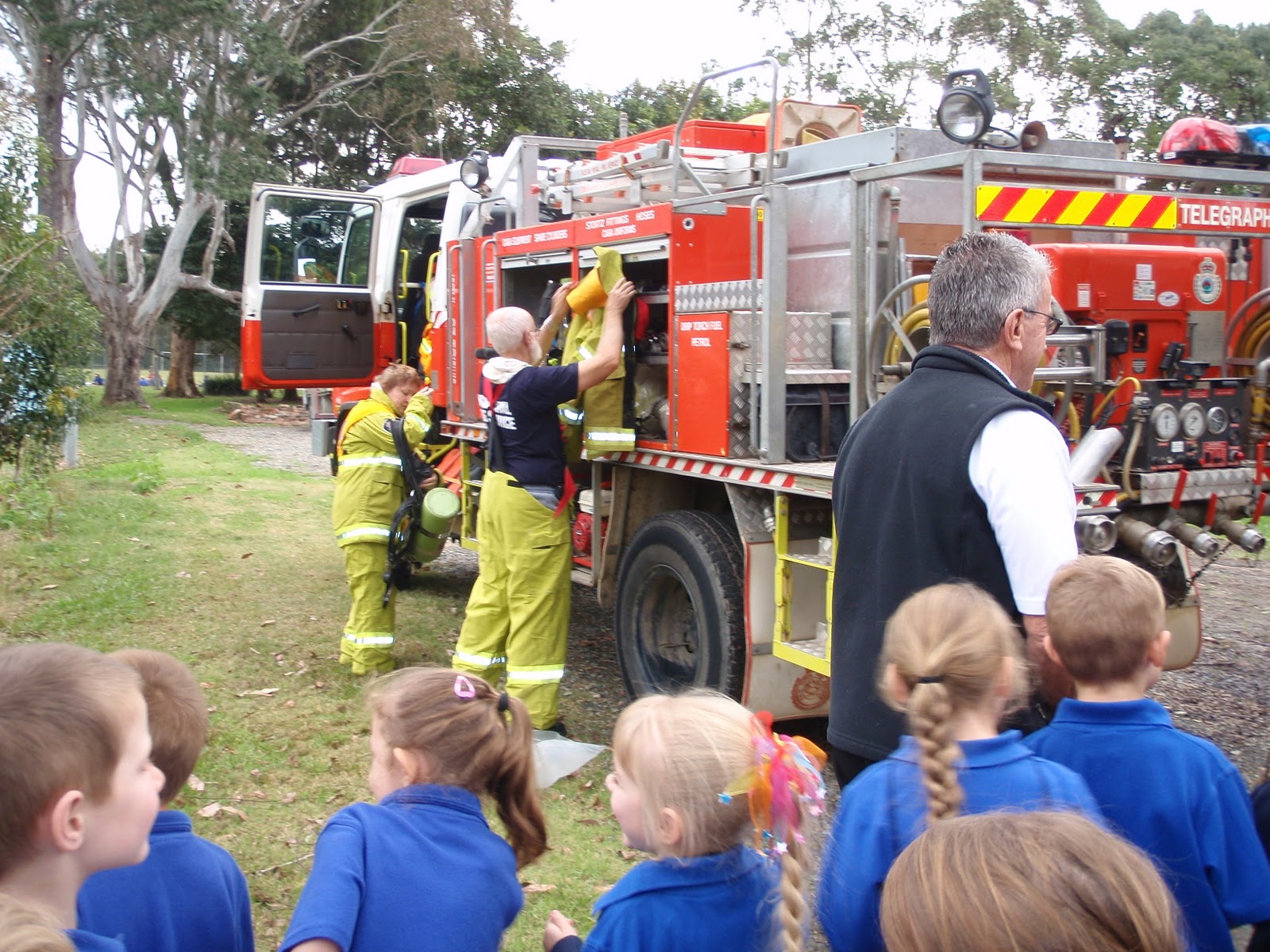
This truck was out at a community engagement function.
As with many organisations there is often discussion regarding the importance and role of Community engagement. Some members are passionate about the benefits while others cannot see beyond the spray of water from the hose. Many others talk about community engagement being 'core business' but for some that is where it stops - at the talk. It is good we are having these conversations, at least the level of consciousness around community engagement is increasing - the big challenge is to raise the level of consciousness into yet higher levels of activity!
 We have over 70 000 members with the clear majority of these being volunteers who all joined the NSW RFS for different reasons.
Ensuring the importance of the Bush Fire
 Survival Plan is understood
 For every person that simply states they 'joined to put the wet stuff on the hot stuff' there is another person complaining that our communities 'expect a fire truck to arrive in every drive way' during a fire. It is sometimes believed that the minimal expectation may be at least one fire truck per street!


So how do we take the next step forward? How do we keep raising that level of consciousness? How do we let our community members know that a fire truck may not always arrive in their street? How do we increase the understanding within the NSW RFS that community engagement compliments active fire fighting activities?

How do we get our often complex messages out in a way that the community can understand?


Let's detour a minute to that complex messaging and disect that a bit further. The message to the community is;


'The safest option is to leave early well before the fire impacts. However if you chose to stay and defend you must ensure you have a well prepared home, in a defendable space and be physically and emotionally capable. But you should never stay and defend on catastrophic days. On extreme weather days only consider staying if you are prepared to the highest level such as your home is specially designed, constructed or modified and situated to withstand a fire.'


This is only part of our message. I have not mentioned other critical facets such as the Fire Danger Ratings, Warning and Alerts or Neighbourhood Safer Places.


Put yourself in the shoes of a community member with no fire knowledge or background and there arises another myriad of questions such as;
• what is leave early - the day before, the morning of or when the fire is 50 kms away
• how do I know when the fire will impact
• what is a defendable space
• why do I need to be emotionally prepared
• how do I know my home is prepared to the highest level
By the way, the answers to these questions, and others, can be found in the recently launched NSW RFS Bush Fire Survival Plan

So back to those steps, to moving forward, to raising yet more the active support for community engagement within the NSW RFS and how do we engage our communities?

Surprisingly the answer is not simple - it rarely is when we are talking about behavioural change.

We need to engage our colleagues internally so they can REALLY understand the benefits to move them beyond talk and into real support or action. We need to increase their level of understanding - that effective engagement leads to engaged communties and can free them up to focus on the actual fire fighting during an incident.

Genuine and effective community engagement has benefits for both the members of the RFS and the communities in which we serve.

Our brigades share knowledge on fire safety
 with their communities
We need to understand that recognising the diversity of NSW is key to developing our capability to engage our communities. An ageing population, increasing cultural diversity, higher education rates and significant change in family structures; coupled with the ongoing, rapid rate of technological change and the impact weather conditions have on communities openness to fire safety messages, all present challenges and opportunities for those of us involved in community engagement in the NSW RFS.

Of equal importance is the need to recognise and utilise the diversity of our members who deliver community engagement.


In my next post I will take a look at internal engagement before we talk more about external engagement. Many of you are doing some brilliant work with engaging internally and sharing the skills and importance of community engagement. I am hoping our Road Show and Tell in a month will help share this work across the state.

You're input and ideas are very very welcome.


Engagement can be strengthened by the sound of many conversations.


Cheers from Tanyia  


20 January 2011

RFS News - showing our NSW RFS volunteers helping clean up after the QLD floods http://ping.fm/rhPJw

19 January 2011

There is so much to do but it is all GOOD!

Hello All,

Emma is working on the Conference and the toolkit
as well as other projects


 Well the Community Engagement Toolkit is well and truly underway with the draft being available soon. This toolkit will kind of be like an 'operations manual' for those undertaking community engagement activities with a pile of ideas on the how to's, tricks of the trade and resource hints and tips. If you are interested in reviewing the draft toolkit please email Community Engagement Team and you can be added to the review
team. We welcome as much feedback as possible because to quote Emma "it is a resource that you will be using so lets make sure it has everything covered."
 
The 2011 Community Engagement and Fire Awareness Conference venue has been booked and you will start to see more information on this over the coming month. Expressions of interest to present and exhibit will go out over the next week along with nominations for registrations to attend.   

Our Conference is about Community Engagement, Fire Awareness, Social media and working with our
communities. It will be held at Wollongong at the Novotel.
  
Those who nominated to be a part of the volunteer working group will be notified of their appointment in during the next fortnight and expressions of interest for staff to be a part of the committee will be released during the same time period.

We have drafted a grass fires fact sheet which will be released in the next couple of weeks. This has been a topic of interest of late and highly sought after. Thanks to  
everyone who has reviewed the draft versions, your feedback was great! Other fact sheets currently in draft format include 'Defending Your Property', 'Total Fire Bans', 'AIDER' and 'BBQ, Recreational and Cooking Fires'.

A Property Assessment Tool is currently being developed to
An example of 1 side of a key message card
 assist members with property inspections. If you have ANY examples we would love you to share them with us as Emma is intent on delivering what she refers to as the "SUPER" version.

Lyndle is working on the
key message cards, the Roadshow
and other projects
Lyndle has sent the key message cards, complete with RFS
Caribeena's, off to the printers and we will have these to hand out at our Roadshows (refer previous Blog post). The key message cards are playing card size, double sided, laminated and will go onto the caribeena so they can be clipped onto your belt, pants or display stand. We will also have posters of these that you can use at displays. The intention of these cards is to give you a tool that contains our main key messages in the one place, is easy to use and can be used when chatting to members of the public or other RFS members. They also relate to the content of our recently launched Bush Fire Survival Plan.
  
Stay and Defend icon
 
As part of the key message cards and the Bush Fire Survival Plan Lyndle and the team developed some icons to help with written communication - let us know what you think of them. The icons represent some of our key messages as a picture. There have been 8 developed so far. They can also be used as discussion starters with children. As an example you could ask a child what they think the 'Leave Early' icon means. What the picture represents to them?


Cheers all
From the NSW RFS
Community Engagement Team at HQ


10 January 2011

It is 2011 and the roadshow is back and we want YOU!

Hello All,
2011 is set to be exciting as we continue to develop tools and processes to help our members engage their communities.

Community Engagement Roadshow 2011- the roadshow is back and we want YOU!


We are planning the Community Engagement Roadshows that will be happening around the state this coming March. This year the theme is 'Roadshow and Tell', with the focus being about sharing lessons learned, knowledge and tools with each other.

This years Roadshow will again involve you sharing with us what is happening in your area.  We will share with you what we're working on and you will have the opportunity to share your knowledge and ideas. We are going to open the floor to local presenters, giving them the opportunity to share the great initiatives, resources, tools or programs that are being developed and used at a local level.

Some information you may want to share may include:
  • how you deliver your school presentations
  • what presentations you give to local community groups
  • how you run your street meetings
  • what tools, props and communication materials you have developed locally
  • ideas on what works in your community
  • how do you get your brigade involved in community engagement
  • local workshops you may run


The aim of the Roadshow and Tell is to:
  • encourage two way communication - It's all about talking and listening!
  • share ideas for Community Engagement activities with other areas around the state. This is about the RFS not 'reinventing the wheel'. It makes more sense for us to use what has already been developed than have each area create their own version of the same activity. It may also be beneficial to blend a couple of ideas from different areas - combine some great ideas - to improve the over all end product
  • provide more effective support and assistance. The more we learn about your needs at the local  level the easier for us to understand how we can best provide you with support
  • continually improving what we do and challenging ourselves to do better!

This theme came from suggestions at the Region North and Region East Community Engagement Forums in 2010. Both forums suggested that the more opportunities we provided for people to share information across the state the stronger Community Engagement would be through out our organisation - it really does make sense! 

So to make this years Roadshows just as good as last years WE NEED YOU! We are looking for presenters from around the state to present at their local Roadshow. We'd love to see demonstrations, unique displays, documents, tools and resources you've developed. We’d like to see anything that is working well for you in engaging with your communities! It may be serious, it may be humorous, it may a simple sharing of lessons learnt, it may be delivered as an informal chat or part of a lesson plan - the choices are almost endless!

If you have something you'd like to present at your local Roadshow, or if you know of a story from your area that you think would be great to share we'd like to hear about it! Please contact the Community Engagement Team on 8741 5417 or send an email to Community Engagement Team

In our next blog we will give you an update on our Conference preparations. Our May Conference will be held at the Novatel Wollongong this year instead of Newcastle. We are excited about the new venue and the conference opportunities it provides such as accommodation will only be spread across 2 motels with the majority being able to stay at the Novatel, improved parking and access and really good conference facilities - watch this space!

We thought we would share the teams favourite quote at the moment. It is
'Think like a wise man but communicate in the language of the people.'
William Butler Yeats
 Have you any quotes that you like that are relevant to community engagement? If so we would love to hear them.


Cheers
Tanyia and the HQ Community Engagement Team