30 November 2011

2012 ACE&FA Conference Update

Hello All.


Here's the new logo for the 2012 Australian Community Engagement & Fire Awareness Conference to be held from 1-2 June 2012 at the Novotel, Wollongong.  The theme is 'Fire Up Engagement!'


Conference planning is well and truly underway.  The submission form calling for abstracts and posters will be circulated shortly.

This year we are opening a new category for submissions - a video category.  This is an opportunity to submit a video that demonstrates how you are firing up engagement in your area. Maybe you'd like to celebrate your successes, pose some questions, show us a community engagement event, share the props and aids you use to engage, interview some members of your community or brigade or set a challenge for others.  Get creative!  Submissions will undergo the usual review process by our Conference Working Party (still being assembled).  Finalists will be screened in a designated screening room with videos on a loop and we'll also post to our social media.  Submissions will be required on CD or DVD rather than sending us weblinks to YouTube.


Conference Working Party expressions of interest have been extended for Region West and Region North only.  The extended deadline is Fri 9 Dec.  We'll confirm the final Working Party shortly.


Kind regards,


Nicole
Community Engagement Coordinator
community.engagement@rfs.nsw.gov.au

07 November 2011

Calling for EOIs for Conference Working Party

Dear All,
The Community Engagement Team in HQ has started planning the 2012 Australasian Community Engagement & Fire Awareness Conference. The theme is ‘Fire Up Engagement’ and the event will be held from Fri 1 June – Saturday 2 June 2012. The venue will once again be the Novotel in Wollongong.

We are calling for expressions of interest (EOI) for members of our Conference Working Party. Working Party members will help us to shape the program and workshops, rank abstracts and poster submissions, and provide other feedback.

We are calling for 8-10 volunteers who would meet via evening teleconferences as required (teleconference dates and times to be confirmed). Working Party members are not required to travel to HQ for meetings. We hope to get a good spread over the state.
To submit an EOI volunteers are to send a short email (short paragraph or two) that outlines why they would like to be involved and what they can offer the Working Party/Conference. The email must include:

■Name:

■Region/District/Team/Zone/Brigade:

■Email address:

■Contact telephone:

EOIs are to be emailed to community.engagement@rfs.nsw.gov.au by Friday 18 November 2011.

Successful and unsuccessful applicants will be acknowledged by email. We will forward both meeting dates and teleconference details by email also.
If you have any ideas or feedback about last year’s conference also feel free to pop us an email.

Kind regards,


Nicole

Nicole Miller
Community Engagement Coordinator
NSW Rural Fire Service
community.engagement@nsw.gov.au


.

14 October 2011

Off 2 Parliament House for award ceremony -Canyonleigh Brigade will receive an award for a community engagement program they developed RFS

06 October 2011

Why I'm addicted to 'Six Thinking Hats'

I’m a big fan of Edward de Bono’s ‘Six Thinking Hats’ - http://www.debonothinkingsystems.com/tools/6hats.htm 

Kurwongbah State School in QLD has shared some good tools and activities that may be handy if you find yourself stuck - http://www.kurwongbss.eq.edu.au/thinking/Hats/hats.htm

This site brings you up to speed on the colours of each ‘hat’, definitions and how you can apply each one. Click on the link to their ‘annotated bibliography’ for lots of great resources.

For me the Six Thinking Hats are handy when:

• brainstorming

• planning an event or activity

• for problem solving

• report writing

• project planning

Once you work through the ‘hats’ you cover a lot of ground.

Who is your audience? Have you anticipated their needs or reactions? Are you missing something? Are there other opportunities you hadn’t thought of? Are you using the right tools or format?

Any other planning or thinking tools that you like?

Nicole


30 September 2011

Social Media in the 2011 Victorian Floods Report http://ow.ly/6JdKh found over 320 000 social media mentions . . . . . .
SHAPE COMMUNITY ENGAGEMENT in the RFS. Nominate to join the Community Engagement Consultative Sub-committee
http://ow.ly/6IYcp

26 September 2011

Greetings from new team member


Hi everyone!  My name is Nicole Miller and I'm a new Community Engagement Coordinator here at HQ in Lidcome.


My LinkedIn profile is http://www.linkedin.com/in/millernicole so you can read a bit about me.


My career includes film and television production, project management, internal and external communications, and community engagement. My previous position was at the University of Western Sydney where I managed a free community legal clinic and legal teaching program.  I grew up in the Hawkesbury Region (Bowen Mt, Kurrajong and Richmond) and was a member of Grose Vale brigade as a teenager.  Cumberland Zone HQ took very little time to sign me up on Open Day (see pic below).  My father, Rick Miller, has been a volunteer for Hawkesbury brigades for as long as I can remember and he is a volunteer fire investigator on the Central Coast.


I look forward to meeting many of you and sharing Community Engagement tips, resources and strategies.

Some interesting reading:

Liverpool City Council's Community Engagement toolkit - http://bit.ly/q2siLU. I like their ‘10 Principles for Community Engagement’. Their planning tool on page 2 initially looks a little scary (lots of coloured cells on a grid) yet it actually is quite a useful tool for breaking down a big program or project into bite sized jobs.


Best wishes,

Nicole

PS - I hope your Open Days were a great success.


Photo caption: Senior Deputy Captain, Ron Freeman, signing up Community Engagement Coordinator, Nicole Miller, at Cumberland Zone HQ Open Day 2011.


06 September 2011

Bush Fire Survival Plan - be honest, have you read it?

Hi there,
At the recent Community Engagement forums we have been spending a fair bit of time talking about our products and the tendency to use 'fire fighters jargon'. When you talk about a subject regularly it is easy to forget how difficult it can be for someone with little or no fire experience to understand words that you use all the time. We have had some really good discussions around some of these words and phrases such as:
  • bush fire prone land
  • ember attack
  • APZ
  • fuel and fuel load
  • asset
  • treatments

Have YOU read this document?
 What has really surprised, and yes alarmed and even confounded me, is how very few of our members are familiar with our Bush Fire Survival Plan. I am still coming across groups of members who have not yet seen the new booklet.


How can we communicate with you more effectively about new tools and products? I would love to hear any suggestions on how we can improve communications, especially about new products and community engagement events such as the regional forums and road shows.


For any of us working with the community on bush fire safety, the Bush Fire Survival Plan should be our main resource tool. It is the document we need to know back to front and upside down. The messages in this document are absolutely core to what we do.


Do you know what order you may receive these?


How is YOUR knowledge? Do you know how many plans are actually in the Bush Fire Survival Plan? Do you know the importance of triggers when developing a plan? Do you know what PREPARE. ACT. SURVIVE. means?

There has been a lot of change to our products such as the Bush Fire Survival Plan, Neighbourhood Safer Places, Fire Danger Ratings and even the Emergency Survival kit we now recommend. It is a hard task to stay up to date and to use jargon free language when our products can be very complex - but it is a challenge we need to embrace and encourage each other to actively try to master.


What ways can we improve our product knowledge?
  • read the Bush Fire Survival Plan - even one page a week
  • pick a page in the Bush Fire Survival Plan and discuss it with your family - how do they interpret it, or your brigade - encourage the discussion
  • speak to your Fire Control Centre to see what information they have
  • have a look at our new fact sheets
  • join our community engagement Facebook page RFS NSW Community Engagement facebook page and become part of the conversation and knowledge sharing
  • ask questions about the Bush Fire Risk Management plan for your area
  • surf our website http://www.rfs.nsw.gov.au/

For me being involved in discussions is a really good way to learn and remember important information. It is also a good way to challenge my own interpretation and understanding of a topic. Even if you are confident that you are up to date with your understanding of our products, I encourage you to engage others in conversations about our bush fire safety messages so that together we can all improve our knowledge.


The power of the conversation should never be underestimated!


Our main message


Cheers from
Tanyia


07 July 2011

Want to join the NSW RFS Community Engagement team? We have 2 vacant positions http://ow.ly/5ylqa- . A job that can help save lives!

28 June 2011

About connecting with communities .. . . . .

When surfing the internet recently on the words 'community engagement', I came across a phrase that said 'effected people should be invited to participate in community engagement processes first'. I started to ponder what this type of statement could actually mean in relation to community engagement in the RFS? How does it translate into our world?

Engaging on level of bush fire risk is core business for the RFS
Is it that we need to focus our engagement on the areas in our community that may be most at risk of a bush fire? Have you looked at the Bush Fire Risk Management Plans (BFRMP) for your area? Has your brigade looked at them? If we were to genuinely seek to make a real difference to the Bush Fire Safety of our communities, then doesn't it make sense to target our community engagement efforts to the areas most at risk of a bush fire?

So if we are working towards making our community engagement activities count then we need to understand what IS community engagement. One definition of community engagement is:

'Community engagement' is a planned process with the specific purpose of working with identified groups of people, whether they are connected by geographic location, special interest, or affiliation or identity to address issues affecting their well-being.
Victorian Department of Sustainability and Environment

What appeals to me in this definition are the words planned process (though I am usually not keen on being process driven), working with, identified groups and well being.


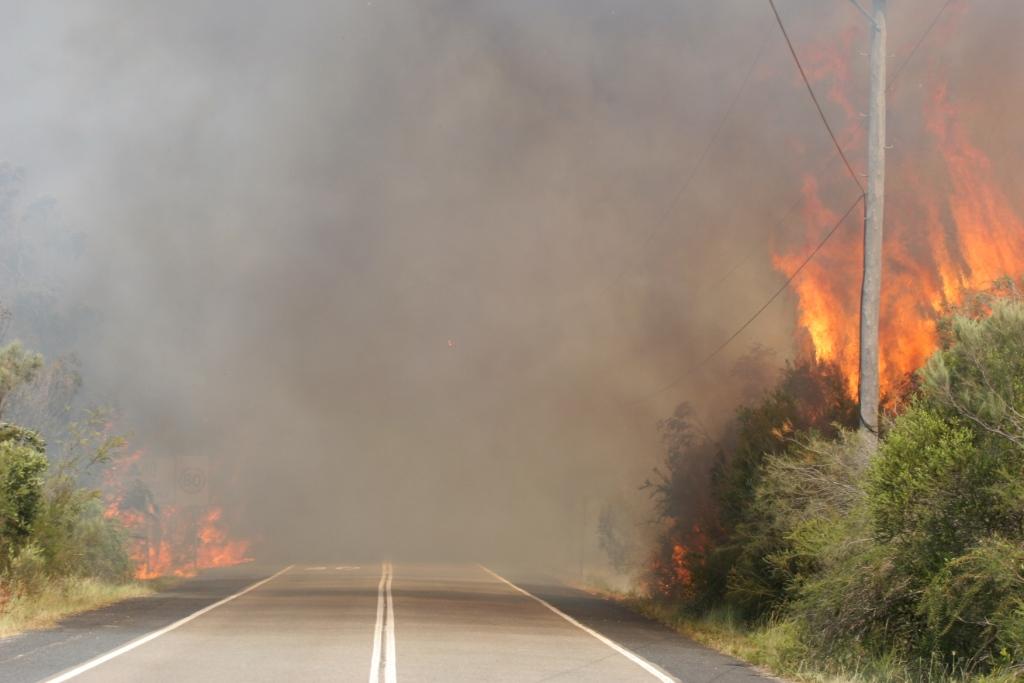
Ensuring communities know what to expect when a bush
fire occurs. Photo courtesy Gary Walker
 Is what you are calling community engagement REALLY community engagement?

Is it a planned process that involves working with identified groups?

Are your community engagement activities interactive? Or are they about "telling and directing"?

Are they about the sharing of your goals  for a safer community?

Are they about creating a real, honest connection and two way communication?

What is the difference between public relations, recruitment, community education and community engagement? Is there a difference?


Community engagement takes planning and is not as an afterthought. Engaging is hard work, and won’t get the time and attention it needs if the leaders of organisations and teams, do not stress its importance. Just as importantly the community is smart, and people will quickly recognise when engagement is being given lip service, rather than seen as a priority. When we go through the ‘motion’ of engagement in order to tick a box, or so that we can say ‘it has been done’, then we actually build up a community resistance to future community engagement approaches that may in fact be genuine.

So following are some suggestions for you to consider:

Research
Know the ‘connectors’ in the community that you wish to engage on bush fire safety. Where do people gather, go regularly and what brings people together. Know who are the community leaders, both formally and informally. What are the issues in that community? What has happened when other organisations (councils, developers, utilities, health organisations etc.) have tried to engage the community? What type of community is it? Close knit, disparate, geographically isolated, attached to the history, fast growing – all groups or communities have their own personalities.


Do residents in high risk areas know they live in a
high risk area? Photo courtesy Gary Walker.

Listen.
Engagement is not just promotion- handing out of newsletters and holding a display. If your engagement is all about telling the community what’s important, what you’re doing and what you want them to do then it’s not engaging. We need to actively plan for, and seek, two way communications if we want to increase the level of community action. We need to listen and we need to actively seek to understand their position and attitude.

Join local conversations.
We cannot expect all of the conversation to come to us. People are discussing community news, events in the community, what their neighbour is doing and lots of day to day chatter in physical community locations and with social media tools such as Face Book and community blogs. You need to join those discussions and respect the place of others who are leading the conversations.

Telling and one-way conversations have their place, but real and effective engagement involves more than one voice in the conversation. It involves listening, sharing knowledge, seeking suggestions, encouraging the sharing of stories, asking questions, checking for understanding, sharing learnings and personal experiences. It involves conversations and humility. To engage we need to be thick skinned, tolerant, tactful, resourceful, resilient and approachable. We need to remember how crucial conversations are to learning, changing behaviour and improving the understanding of bush fire risk. Conversations need a friendly voice and often benefit from the ability to have a laugh.


Conversations are critical to community engagement

Community engagement has many different shapes and forms. It can zap all your energy or leave you on a high feeling really positive. In the RFS it is about helping people to understand their level of risk to bush fire so that they can take steps to protect themselves and their families. It is about making real connections that could help to save a life.


We connect. We interact. We exchange knowledge. We listen. We build relationships in our communities to help preserve life and property from bush fire.


Cheers and thanks

Tanyia